
Winter Vehicle Maintenance Checklist for London Drivers
Local winter safety starts with prevention
Winter in London, Ontario can be hard on vehicles. Cold temperatures, road salt, slush, and potholes all add stress to your battery, heating system, tires, brakes, and suspension. A quick seasonal check keeps your vehicle safe, helps avoid breakdowns, and saves money by catching small issues before they turn into major repairs. Use this family-friendly checklist to get road-ready for winter conditions across London and nearby communities.
1. Battery and starting system
Cold weather reduces a battery’s available power and can expose weak connections. If your engine cranks slowly or your headlights dim at idle, book a test. A proper battery load test, alternator output check, and inspection of the starter and cables will confirm everything is healthy. If your battery is older than three to five years, consider replacement before the next cold snap.
2. Heating, defrost, and cooling system
Your heater relies on the same cooling system that keeps your engine at the right temperature. Low coolant, a weak thermostat, or a failing blower motor can leave you with fogged windows and a cold cabin. Have your coolant level and condition checked, inspect hoses and clamps, verify the thermostat is opening correctly, and confirm the blower and cabin air filter are working as intended.
3. Tires, rotation, and tread depth
Winter traction depends on tire condition. Check tread depth and look for uneven wear that may point to a needed alignment. If you run winter tires, verify pressure when the tires are cold and recheck monthly, since pressure drops with temperature. Rotating your tires on schedule evens out wear, improves stability, and helps you brake and steer with confidence on snowy or icy roads.
4. Brakes and ABS function
Salt and moisture can cause surface rust on rotors and stiffen brake components. If you notice squealing, grinding, or a soft pedal, schedule an inspection. A technician will measure pad and rotor thickness, inspect calipers and slides, and address any issues before they affect stopping distance. Confirm that your ABS warning light is off and that the system engages normally on slippery surfaces.
5. Wipers, lights, and visibility
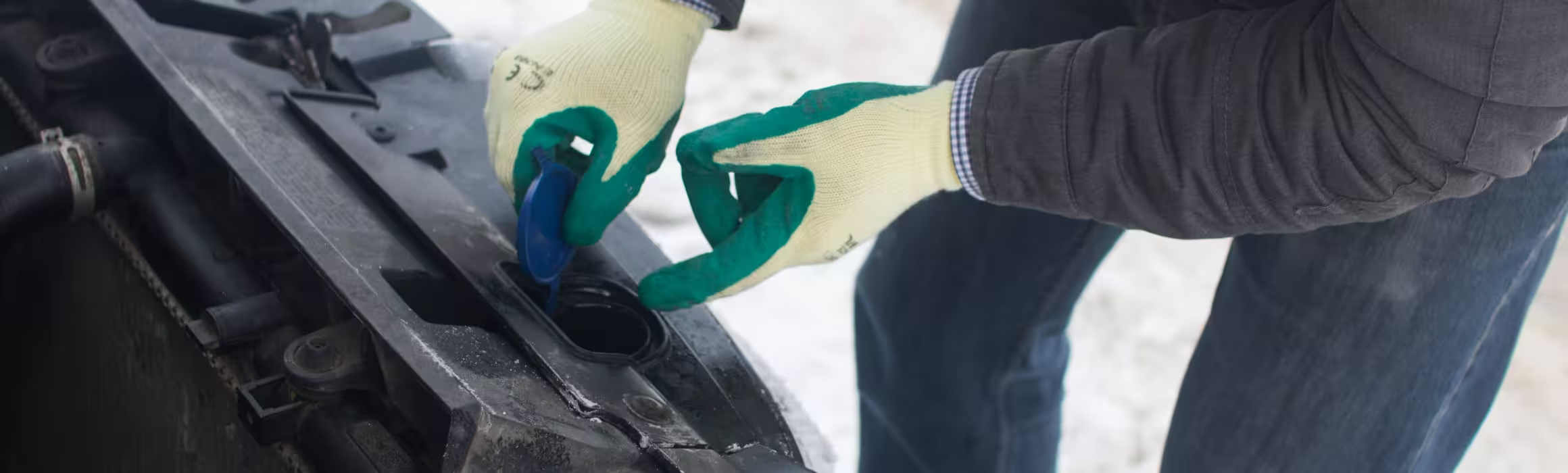
Good visibility is essential in winter. Replace streaking wiper blades, top up washer fluid rated for low temperatures, and keep a spare jug in the trunk. Check all exterior lights, especially low beams, brake lights, and turn signals. Clean road salt off headlight lenses to improve brightness.
6. Fluids, belts, and filters
Cold weather stresses belts and thickens fluids. Verify your oil is the recommended grade for winter temperatures, and check the condition of brake fluid, power steering fluid, and transmission fluid. Replace worn accessory belts, and install a fresh engine air filter and cabin air filter if they are dirty.
7. Emergency kit for Ontario roads
Keep a winter kit in the car that includes a snow brush and scraper, booster cables, gloves and hats, a small shovel, sand or traction mats, a flashlight, phone charger, and non-perishable snacks. A compact first-aid kit is also a good idea.
Quick winter checklist
- Test battery, alternator, and starter
- Check coolant level and condition, hoses, and thermostat
- Inspect tire tread depth and pressure, rotate if due
- Measure brake pad and rotor thickness, verify ABS
- Replace wiper blades and top up winter washer fluid
- Check oil grade and fluid levels, inspect belts
- Load a winter emergency kit for longer drives
Book your winter inspection at Hanford’s Tire & Service in London for reliable local care. Our technicians can check your battery, brakes, tires, and heating system in one visit so you can drive with confidence on Ontario roads.